Creatine, reconsidered
Your brain runs on creatine. The supplement aisle has only ever sold it to your muscles.
Half of your supply you make yourself. The other half comes off your plate. After your 30s, the total starts to drift down.
Where one scoop actually goes
Same molecule, same job, two tissues. Built from BrainMD's own published explanation of how creatine becomes phosphocreatine and replenishes ATP.
Walk into any supplement store and creatine sits with the whey, the pre-workout and the shaker bottles. That shelf placement is a marketing decision, not a biological one. The molecule was never told it had been filed under sports nutrition, and it is at work in a tissue that has nothing to do with lifting the tub off the shelf.
BrainMD, the supplement company founded by psychiatrist Daniel G. Amen, has been running an ad that opens with a single flat sentence: most people do not know their brain runs on creatine. It is a strange thing for a brain company to have to explain, and it is worth taking seriously, because the reason nobody knows it is not that the science is new. It is that the category was named after the wrong organ.
Here is what the molecule is, what it does in both places, and the five things people believe about it that the published work does not support.
First, what creatine actually is
Creatine is a small molecule closely related to amino acids, the building blocks of protein. You do not have to eat it to have it. About half of the creatine in your body is made from amino acids in your liver, kidneys and pancreas. The other half comes from food, and specifically from animal flesh: wild game, lean red meat, and fish, with salmon, tuna and herring at the top of the list. BrainMD notes the obvious consequence in its own explainer, which is that vegetarians tend to run low.
The total your body makes on its own comes to about one to two grams a day. That number matters later, because it sets the scale for everything that follows.
Why the gym got there first
Every cell you own runs on adenosine triphosphate, ATP. It is the currency. The problem with ATP is that you cannot store much of it. During genuinely hard effort, BrainMD's explainer puts the working reserve at ten to fifteen seconds before it is gone.
Creatine is the workaround. Once it is in the cell it becomes phosphocreatine, which holds a spare phosphate group and hands it over to rebuild ATP on demand. More phosphocreatine in the tank means the ATP gets rebuilt faster, which means the tenth rep looks more like the first.
That is an extremely legible benefit. You can see it on a barbell inside a week. So the sports industry took the molecule, and it has been theirs ever since. The International Society of Sports Nutrition calls creatine the most effective supplement in existence for adding muscle mass, and BrainMD cites studies putting the improvement in high intensity exercise performance at as much as 15 percent.
The tissue that was never in the marketing
The brain runs the same ATP economy as a quadriceps, and it uses the same phosphocreatine buffer to keep that economy stable. BrainMD's myth article says it in one line: creatine is also important for adequate ATP in the brain, which may support improved cognition.
Their ingredient explainer states the asymmetry plainly:
Creatine is well-known for its benefits to skeletal muscle tissue. However, when taken as a supplement, creatine is less known for its impressive use by the brain. BrainMD, Smart Creatine+ ingredient explainer
Two specifics are worth pulling out of the research BrainMD cites.
The first is a 2021 review reporting that supplementation can raise brain phosphocreatine content by up to 15 percent. That is not a mood claim or a wellness claim. It is a measurement of how much energy buffer the tissue is carrying.
The second is where that buffer earns its keep. BrainMD's own wording is that creatine helps maintain ATP homeostasis during periods of rapid or altered brain ATP turnover, which it defines as complex cognitive tasks and periods of sleep deprivation. In plain terms: the buffer does the least when you are rested and doing nothing hard, and the most on the day you slept five hours and still have to think.
That is consistent with the study BrainMD points to in which sleep deprived participants taking creatine held up better on reaction time, balance and mood than those who were not.
The honest limit
BrainMD does not overstate this, and neither will this page. Their own article says it directly: not all research to date shows benefits, and more work is needed to conclusively substantiate creatine's cognitive effects. The muscle literature is mature. The brain literature is younger, promising, and not finished.
Five things people believe about creatine that the research does not support
Creatine is misunderstood widely enough that a group of researchers from the United States, Canada and Brazil published a paper in the Journal of the International Society of Sports Nutrition in 2021 specifically to clear it up. BrainMD summarized five of those points. They are reproduced here because every one of them is a reason somebody does not buy.
It is not, and the two are not chemically related.
Anabolic steroids are synthetic testosterone. Structurally, the steroid molecule bears no resemblance to creatine. The distinction that actually matters is legal: anabolic steroids are a controlled substance you cannot possess without a prescription. Creatine is an over the counter dietary supplement.
Research across populations shows no increase in fat mass.
Weight can move, and this is where the belief comes from. Creatine draws water into muscle tissue, particularly at the start. BrainMD's article is explicit that the effect is temporary, and that any lasting gain on the scale is muscle rather than fat.
This one comes from a lab result being read backwards.
Creatine is among the most studied supplements on the market. Taken at three to ten grams a day by people without existing liver or kidney conditions, BrainMD's article states it does not adversely affect the function of those organs.
The confusion is mechanical. When there is surplus creatine in the body, the kidneys break it down into creatinine to dispose of it. Creatinine is also the marker doctors watch for kidney trouble. So bloodwork on somebody supplementing can read high for a reason that has nothing to do with damage. The caveat is real and stays in place: if you already have kidney or liver problems, creatine is not recommended.
No. Roughly 95 to 98 percent of the muscular benefit comes from the exercise.
This is the number a supplement company has no commercial reason to publish, and BrainMD publishes it. Creatine does not build anything by itself. What it does on its own, according to their article, is help you hold on to muscle you already have, which is the part that starts to matter with age and with any period of immobility.
The population with the most to gain may be the one that never touches a barbell.
Numerous studies show older adults benefit, and BrainMD's product page makes the sharper version of the claim: improved strength, reduced fatigue and better daily mobility in older adults, independent of exercise training. One age limit does hold. The American Academy of Pediatrics and the American Society of Sports Medicine do not recommend creatine under 18.
Then why does most creatine feel like drinking sand?
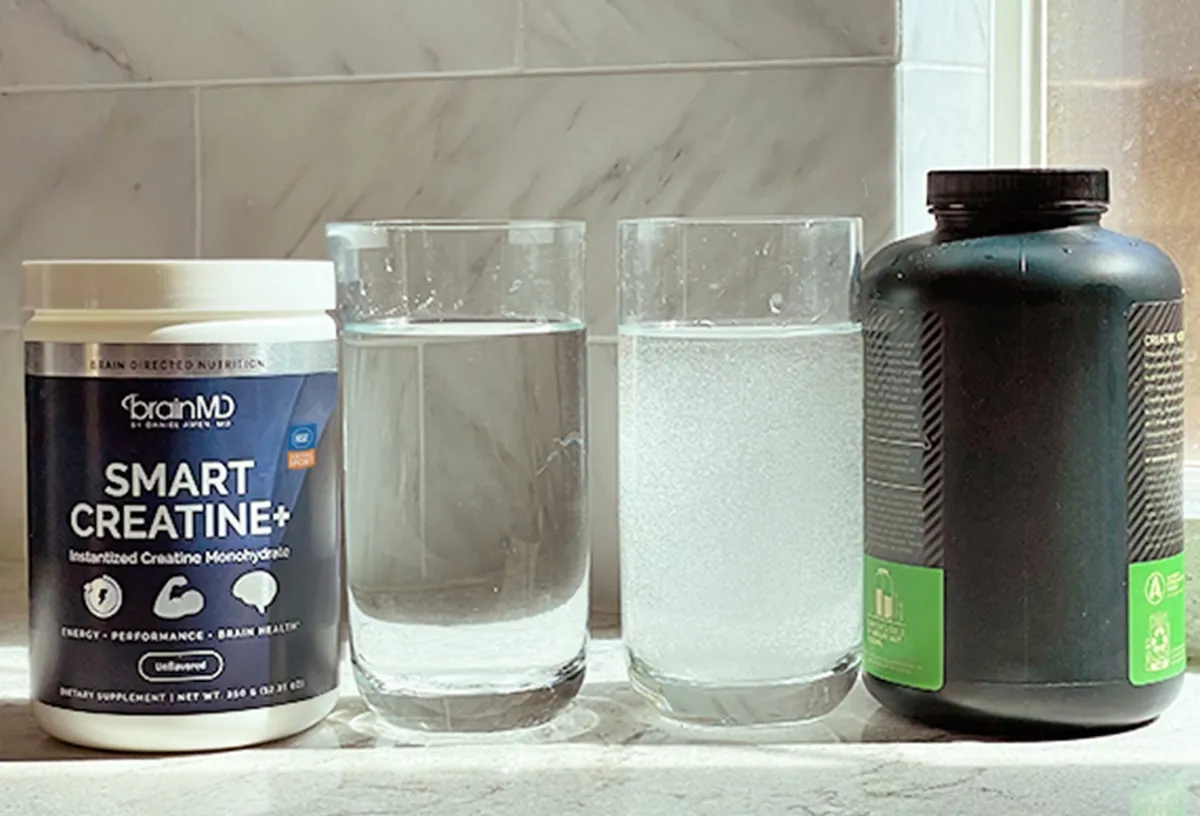
Anyone who has tried creatine and quit usually quit for a reason that has nothing to do with the research. It did not dissolve. It sat at the bottom of the glass in a gray ring, went down gritty, and produced the bloated, crampy feeling that gets blamed on the molecule.
BrainMD's position is that the molecule is not the problem, the solubility is. Whatever does not dissolve in the glass does not stop existing. It arrives in your gut as powder.
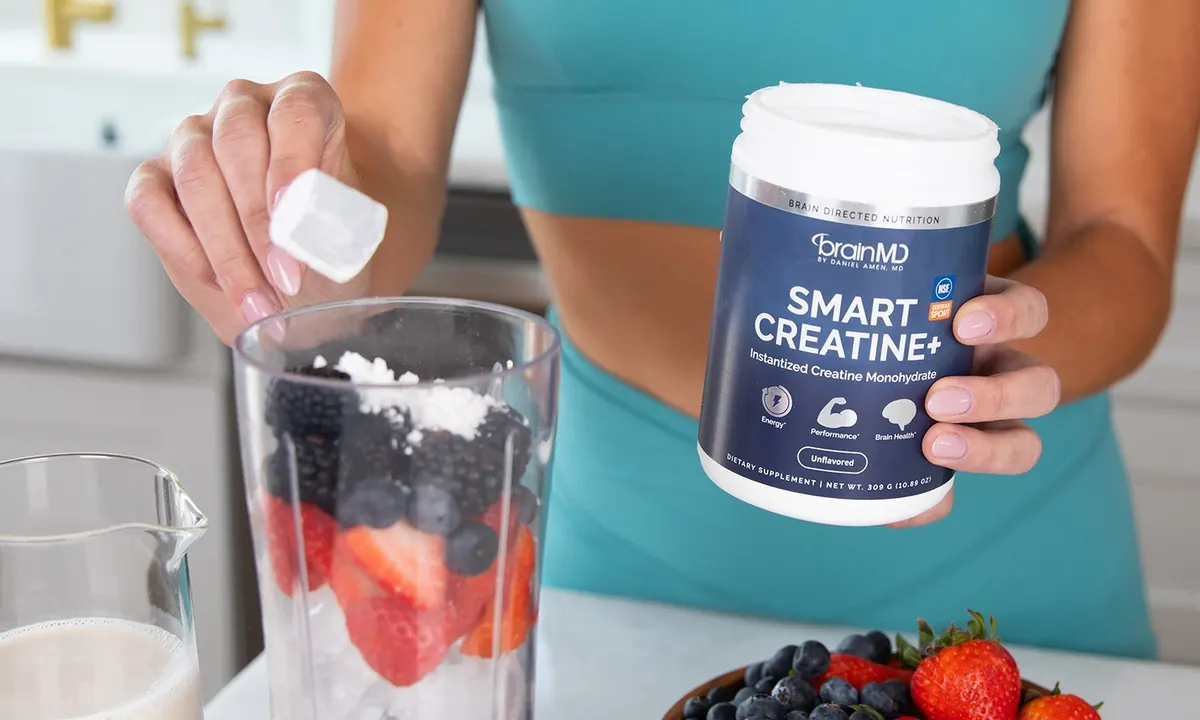
The fix is a processing step called instantizing. Their ingredient, iCreatine, is micronized during crystallization so the particles dissolve rather than settle, and the company is specific that this is done without additives such as soy lecithin. Their framing of the payoff is blunt: the creatine reaches your muscles instead of floating around in your gut making you feel bloated or crampy.
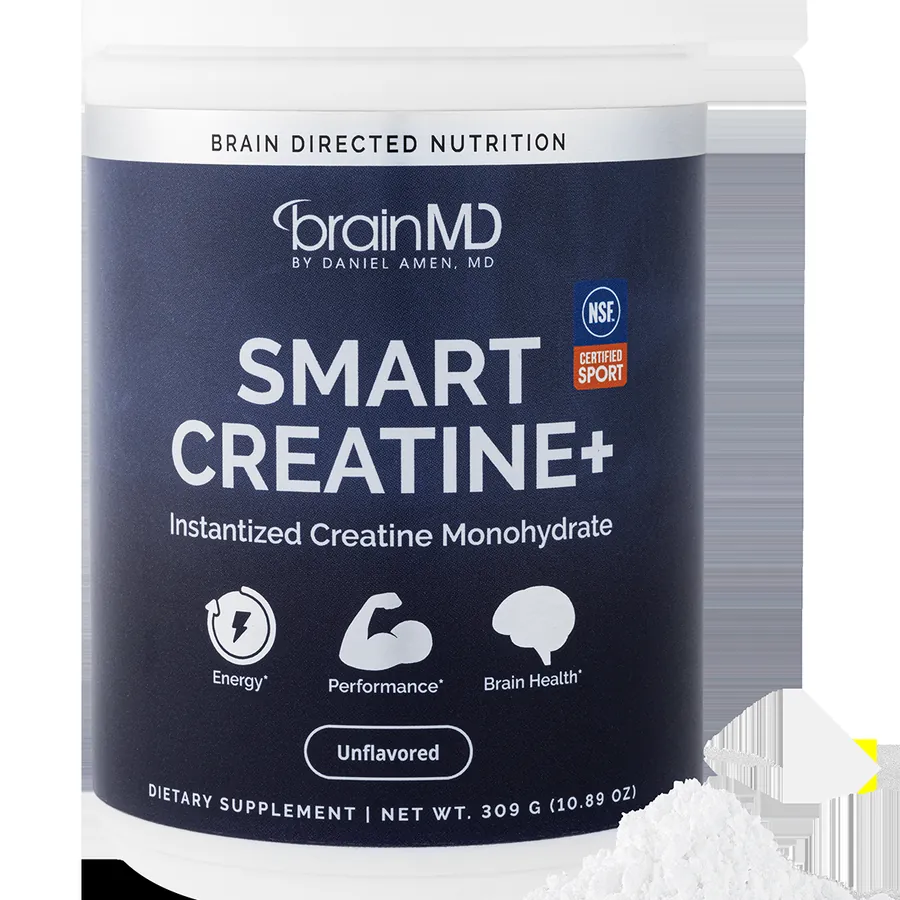
Two further details from their published material are worth knowing when comparing tubs, because both are checkable rather than adjectival. Their creatine is one of only two in the world that BrainMD says fully complies with the USP Monograph, the reference standard for creatine monohydrate. And the finished product carries NSF Certified for Sport, which BrainMD describes as rigorous testing for banned substances and contaminants, making it a trusted option for professional athletes.
What is actually in the tub
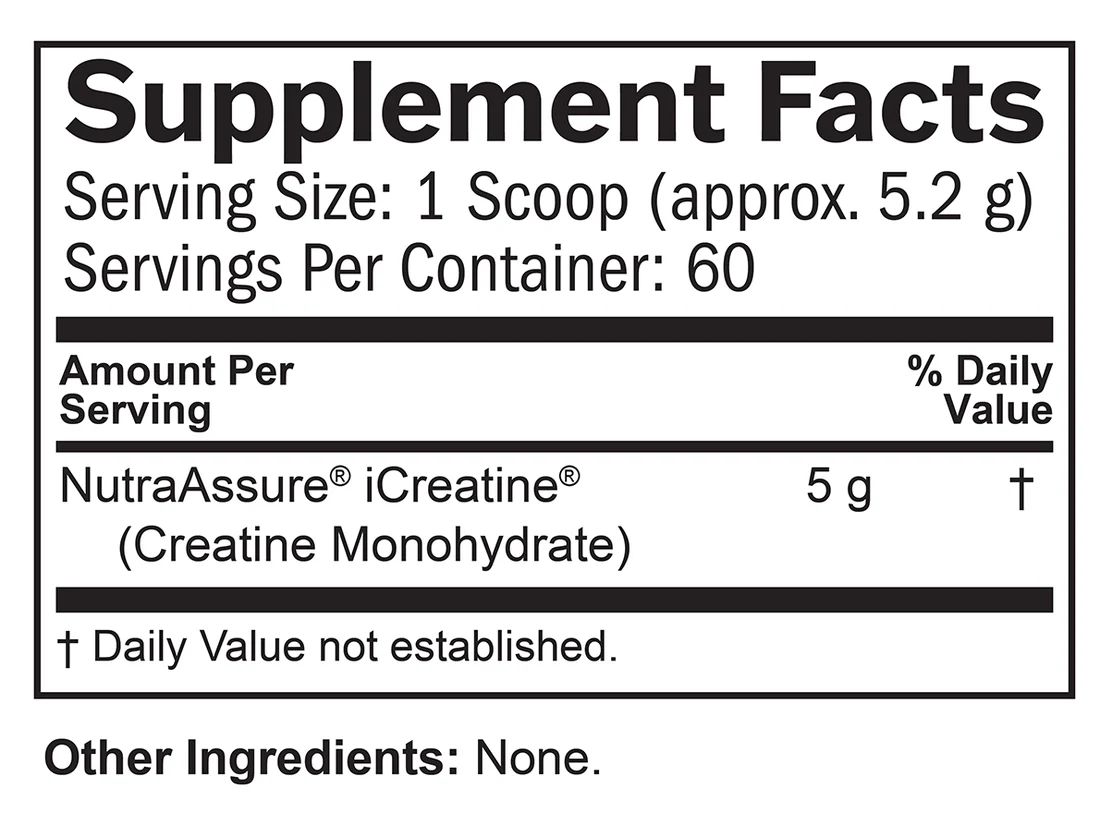
The most persuasive thing on this product is not a claim. It is the ingredient panel, which is two lines long.
| Smart Creatine+, as published | |
|---|---|
| Active ingredient | NutraAssure iCreatine, instantized creatine monohydrate |
| Dose | 5 g per scoop, the dose used in the clinical work |
| Servings | 60 per container, one scoop daily |
| Other ingredients | None |
| Flavor | Unflavored |
| Certification | NSF Certified for Sport, third party tested |
| Price | $36.95 one time, less on subscription |
| Guarantee | 100% money back |
Sixty servings at one scoop a day is two months. At the one time price that is a little over sixty cents a day for the whole thing.
The man whose name is on the tub

That imaging database is the unusual part of this company. Most supplement brands are founded on a formula. This one was founded by somebody who spent three decades looking at pictures of the organ he is now selling nutrients for, which is a different starting point, and it shows in what the company chooses to publish. The five myths above came off their own blog, including the one that says the powder contributes almost nothing to strength.
The brain-specific benefits of instantized creatine are truly remarkable, aiding in cognitive function, memory retention, and overall mental clarity. Smart Creatine+ is perfect for anyone looking to boost the health of both their brain and body. Dr. Daniel Amen, Founder, BrainMD and Amen Clinics, on the Smart Creatine+ product page

What a normal timeline looks like
This is BrainMD's published expectation, not a promise. Creatine loads gradually into tissue, so nothing here happens on day one.
- Week 1
Cellular energy begins to rise as creatine tops up ATP in muscle and brain. The first thing most people notice is stamina during work that is physically or mentally demanding.
- Week 2
Strength, power and recovery start showing up in training. Daily use supports clearer focus and faster recall.
- Week 4
Stores are built up in both tissues. This is where BrainMD expects endurance, recovery and cognitive performance under stress or short sleep to be noticeably different.
- Weeks 8 to 12
The compounding window. Sustained energy, muscle retention, and the longer term memory and cognition support that the research is aimed at.
What buyers actually report
Smart Creatine+ carries a 4.9 average from 454 reviews on brainmd.com. These are quoted as published there.
"I've been taking Smart Creatine daily for about a month and notice quicker recovery, better sleep and less foggy brain."
★★★★★ Susan M. · brainmd.com
"I've been taking the BrainMD Creatine for about 5 weeks so far and I can definitely feel a difference. My brain fog has lifted, my energy is much better, and I believe it has helped increase my metabolism which has contributed to my weight loss. The quality of the creatine is great and the price is very doable. I plan to continue indefinitely."
★★★★★ Sandra N. · brainmd.com
"I take 1 scoop in my morning coffee and I feel more energetic and on top of my day. At first I took it on strength training days and noticed the difference in my energy levels- I take it daily now to reap the benefits. I am 70 years old."
★★★★★ Angela H. · brainmd.com
"This is a highly effective supplement! I am in my early fifties and experience difficulty growing muscle - in less than two weeks I can see a big difference in muscle gain from my usual exercises. The powder is not mixed with other ingredients, and I am not having any side effects. My dose is 5g per day that seems to be plenty. Really glad I gave it a try!"
★★★★★ Mercedes R. · brainmd.com
"I love it, feel powerful, strong, no bloating whatsoever"
★★★★★ Alina L. · brainmd.com
Who should not take it
This section exists because the honest version of a supplement page has one.
BrainMD's own FAQ states that people with pre-existing kidney issues, high blood pressure, or liver problems of any kind should not take creatine. Their published side effect list includes stomach discomfort, water retention and diarrhea in some individuals, plus dehydration if you do not drink enough water, since creatine pulls water into cells. The instruction that goes with the product is therefore not optional: drink plenty of water through the day. Anyone pregnant, nursing, on medication or managing a medical condition is told to check with a doctor first, and creatine is not recommended under 18.
The short version
Creatine is not a bodybuilding product that happens to have a side effect on cognition. It is a component of the energy system every cell uses, and skeletal muscle was simply the tissue where the effect was easiest to see and easiest to sell. Your body makes one to two grams a day and eats the rest, mostly from meat and fish, and the supply drifts down with age.
If you supplement, the research points at plain creatine monohydrate at five grams a day. The only real questions left are whether it dissolves, whether anything else is in the tub, and whether it has been tested by somebody other than the company selling it.
On this one the panel reads: 5 g, and Other Ingredients: None.
See Smart Creatine+ on brainmd.com $36.95 · 60 servings · NSF Certified for Sport · 100% money back guarantee